‘Connect – Promote – Protect’
September 2025
Merry Xmas is on the way
3-Months/15-Weeks to shop!!
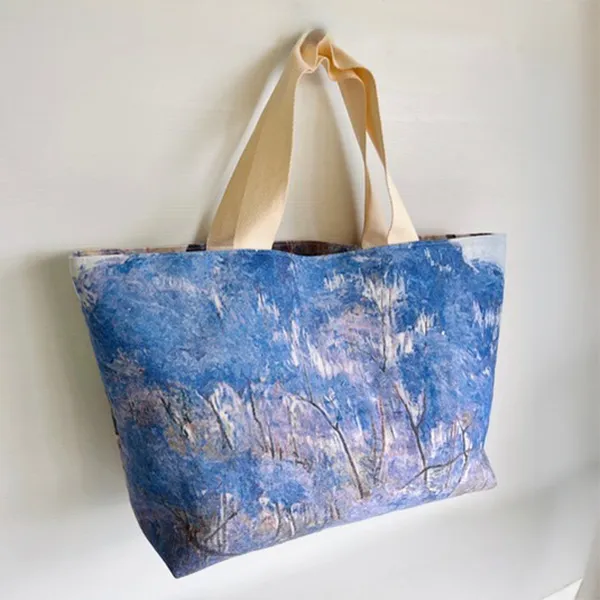
Looking for an easy way to reduce your Xmas shopping stress? Go no further than to look at our SHOP.
Recently we have acquired some Merchandise from a local company who makes high quality bags (big and small) which we are selling.
The materials are all botanical, the work-woman-ship is high quality and they are waiting for any member of FBBGSA to purchase.
We have made the option of click and collect or postal collection. And this month at the AGM the actual products will be on hand if you wish to view them.
So do your research – check out the goods, order online or run the risk that they hopefully will still be available at the AGM. All items are one offs so when they are gone, that is it.
Any suggested items are always welcome. Send your requests to secretary@fbbgsa.org.au .
Brisbane Sustainability Agency (BSA) meeting with FBBGSA
by Julie
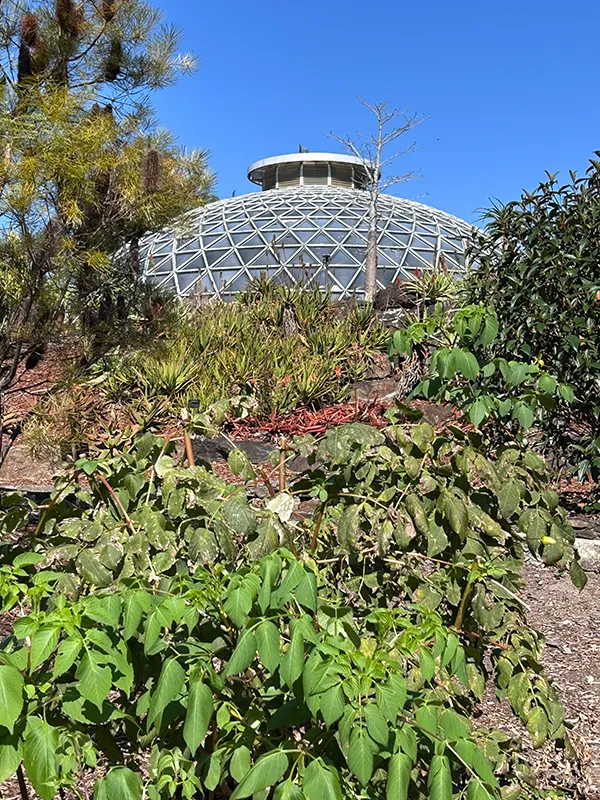
On Friday 5 September myself (Director), Mary Jo (Secretary) and Ashley (Member) of FBBGSA attended a meeting with Cass and Clair from the BSA regarding the BCC proposals for the Botanic Gardens at Mt Coot-tha. We spoke for 2 hours across a range of issues including the proposed changes to the Dome, the Light Show possibilities, options to initiate funding back to the Botanic Gardens, the built environment in the Gardens, car parking and transport (surprise!).
The two BSA representatives were open to listening to our concerns, recommendations, importance of history and legacy, local people’s reactions etc. Cass did indicate that they had to interlace the needs of the Council with the needs of the people and interested parties. They suggested it is early stages of information collection across the different organisations right now with the final report due to be presented to the BCC by June 2026. In the meantime they hope to have a collection of people to form a committee to decide the final outcome.
FBBGSA reps were advised that the Dome’s Perspex windows are due for renewal and the concrete in the Dome is at end of life. They had been informed that the growth of tropical plants in the Dome were restricted due to the height of the structure. The designer’s plans for 3 lit Domes were just that – an image of what could be rather than a definite outcome. The Canadian experience where a similar Dome was built within similar timeframes was discussed including that they had reused the old moulds for the perspex windows. Also the local ratepayers views on “tear them down” mentality rather than conservation.
Light Show DA is still current and discussions on the previous “supplier” and their lack of knowledge was highlighted. The Guides conducting “education” tours on nocturnal plant and animal interaction was proposed by FBBGSA. The BSA reps indicated their preparedness to talk with this group. The impact on the local wildlife was raised especially every night over an extended period and that the Botanic Gardens was an ecosystem relying on animals, birds, insects etc for its existence. Cass did say this was part of their brief.
Other money raising ventures were discussed including an Education Centre maybe based in the Quarry to cover young and old. They indicated the Quarry was many years into the future to be considered. Need for a shop like other Botanic Gardens interstate and the funds returned to the Gardens were massive. The demand is there especially with international visitors where online options are not viable. An Explorer Bus Tour for two days was raised where one day was at the Botanic Gardens and another day in some other region/ Mt Coot-tha walks for example. Then the “stay one more night “ mantra could be addressed. And the prospect of a greenhouse on site to generate funds for FBBGSA which would go back to projects in the Gardens was raised.
The Planetarium building structure was unique and interesting – the legacy of designers and builders of Brisbane were projected as important by FBBGSA and this was all part of the Botanic Gardens history. The lay of the land and the appropriateness of the built structures to fit into the landscape were also raised versus a square or rectangular structure in the precinct.
Local people in parts of Brisbane probably don’t connect with the Botanic Gardens as the public transport options are complicated; the lack of car parking when events are on are difficult and a lack of publicity by the BCC to that area. So promoting to interstate and international people ignores the return visits by locals currently not attending. FBBGSA noted that there are only buses to the Botanic Gardens, rail options are not well serviced even at Toowong. FBBGSA reinforced our mantra was to Protect, Connect and Promote the Botanic Gardens (at Mt Coot-tha and City) to the BSA. It appeared BSA had read the previous “challenges” with the zipline and the past light show.
I am happy to hear any comments from members on the issues at hand via director@fbbgsa.org.au or by phone 0455 512 302.
Casual Walks with Friends
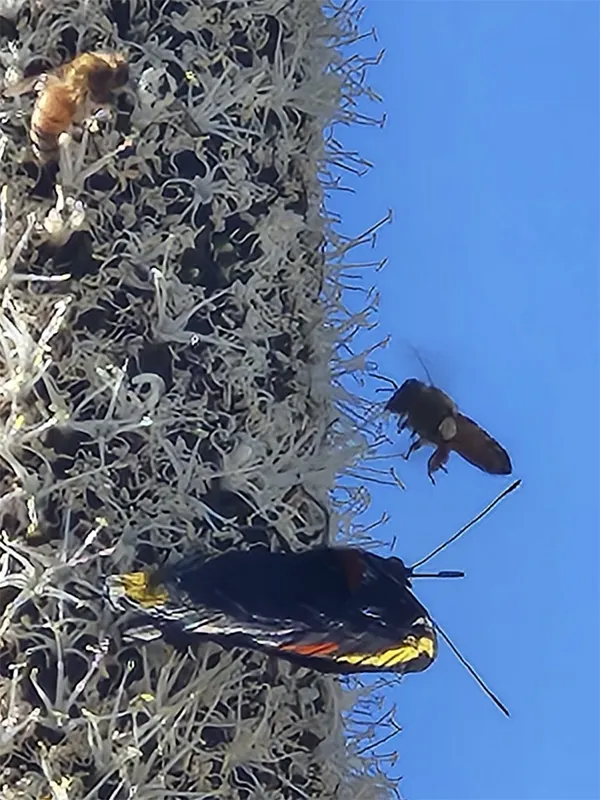
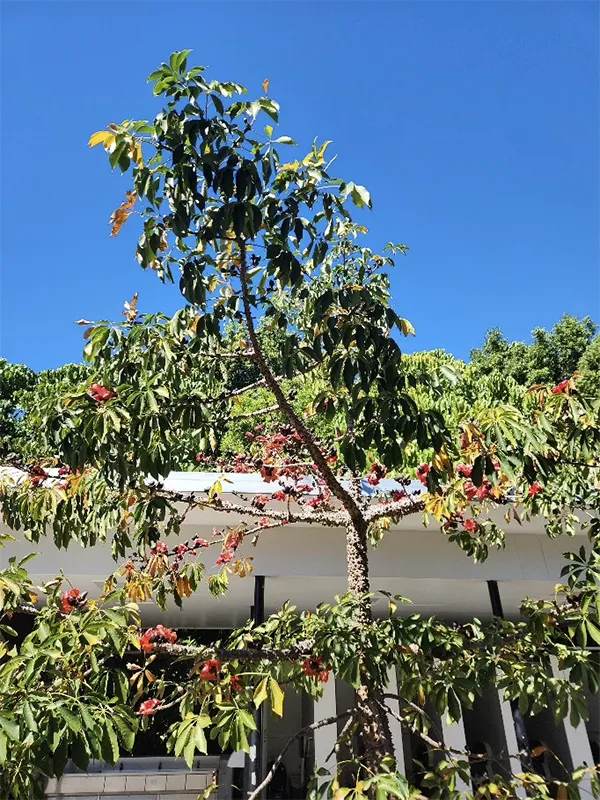
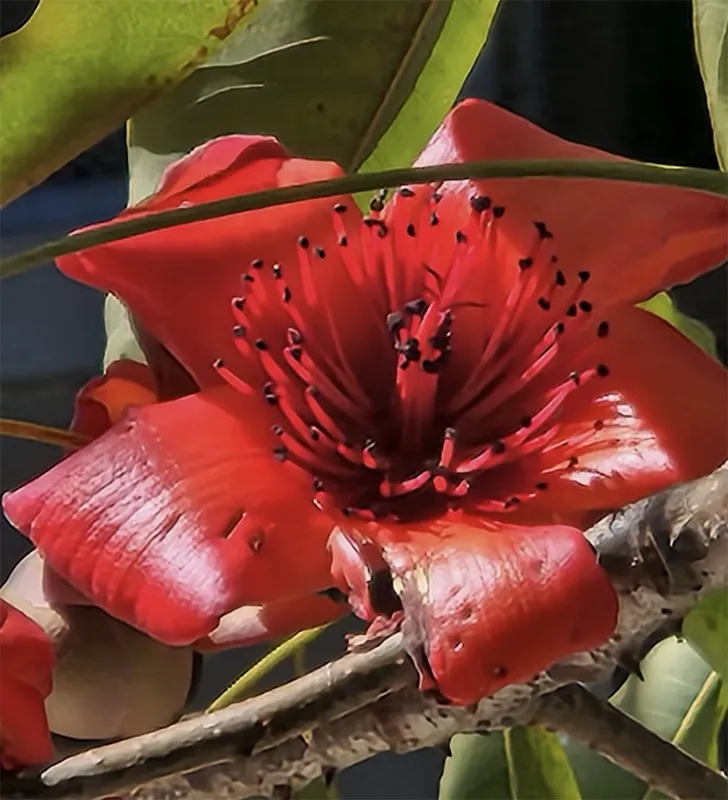
Join other members on the last Sunday of every month for a casual one-hour morning walk in the Mt Coot-tha Botanic Gardens.
Last month, we explored part of the Queensland Conservation Collection, starting at the top of the Queensland Conservation Trail, working our way down to the amphitheatre area. We were really impressed with the variety of native plants, and it is fabulous to see how well-established the plants are in this relatively new area of the Gardens. There was so much for us to look at and we really enjoyed talking about the plants together and sharing our knowledge.
It was a lovely warm morning bursting with the promise of spring. A highlight was watching the bees and butterflies buzzing around the grass tree flowers. We finished the walk admiring the spectacular flowers of the Bombax ceiba, the Red Silk-Cotton Tree in front of the amenities block. This tree from north Australia and tropical Asia is definitely one to visit in springtime.
Sunday 28 September, 9.00 am – The Friends go to Africa!
We’ll be walking to and exploring plants from the African region, stopping to appreciate whatever takes our interest on the way.
- Meet Helen at 9.00 am at the Birdwing Vine Room next to the vehicle access gates between the Planetarium and the Herbarium.
- Walk starts at 9.05 am sharp. If you are late, you’re welcome to try to catch up with us.
- The walk will be approximately one hour long, ending at the Café.
- Enjoy getting morning tea at the Café with other members if you’d like to stay on after the walk.
- No RSVP necessary.
- The walk will still go ahead if it’s raining.
Kitchen Garden
by Patty, 3 September 2025
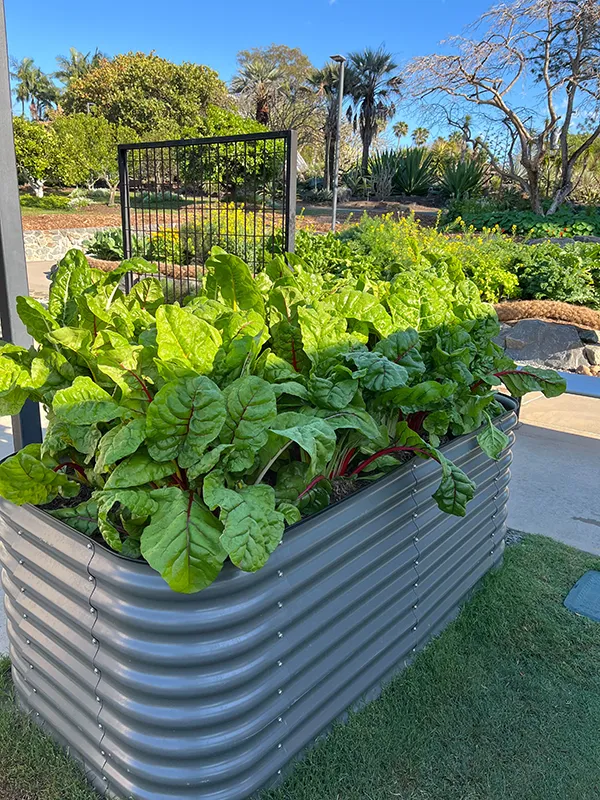
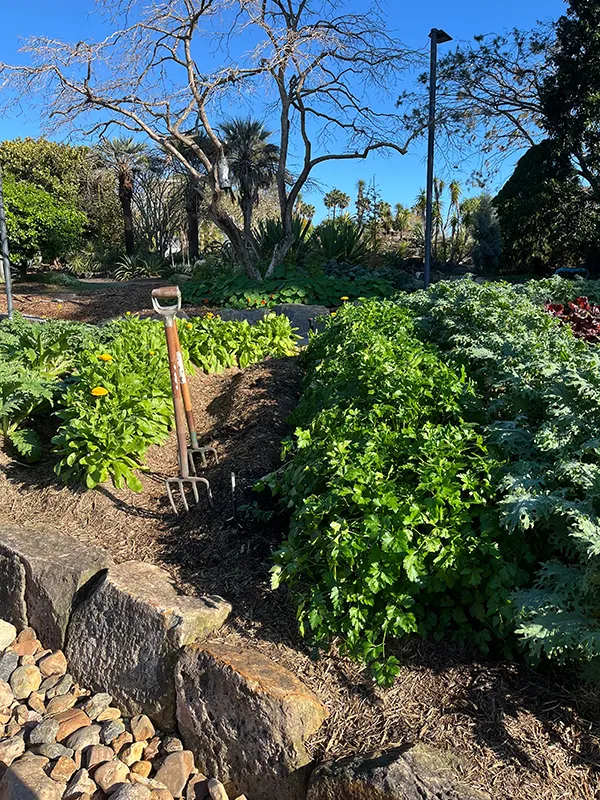
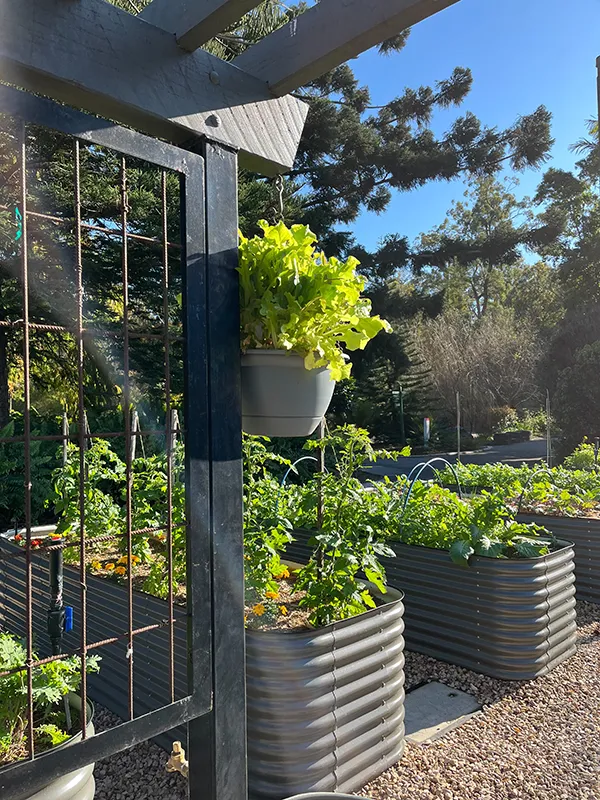
Click on any image to enter the lightbox
We began our working bee in the Kitchen Garden at 8am on a beautiful spring day. The bok choy had gone to seed so some areas were cleared while other areas were kept for seed saving. The bees love the flowering bok coy. Corn seeds were planted, Italian parsley and kale were cut back. Silverbeet is reaching maturity in the built up beds. Lettuce is thriving in garden beds as well as hanging baskets. Iceland poppies are putting on a spring show as are the Alyssum and Calendulas scattered through the garden.
It was another joyful morning in the Kitchen Garden.
There are still spaces for volunteering in the Kitchen Garden. To nominate go to Membership then volunteering and indicate the type of work you wish to do. Alternatively go to Events and click on the next Kitchen Garden date and you can nominate there.
If you have a Kitchen Garden at home or go to a Community Garden why not tell us what you are doing – from fertilising to soil improvement, composting or planting. Send your story to secretary@fbbgsa.org.au – if you have photos that is even better!
Rocks Riverside Park Greenhouse
by Mary Jo
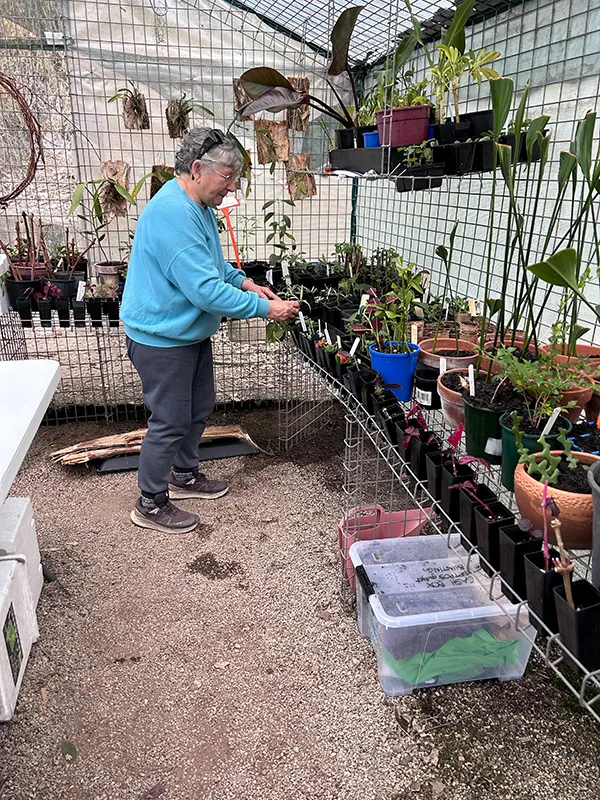
Helping plants grow is always very satisfying. It’s been a very busy and interesting time establishing the Rocks Riverside Park Greenhouse… thanks to our dedicated volunteers and donors.
Tuesday morning is the current designated working bee time for volunteers currently. We welcome anyone who wishes to attend at other times. Please advise by registering on www.fbbgsa.org.au/events.
Time goes quickly when engrossed in potting up seedlings and cuttings… many from the Mt Coot-tha Botanic Gardens. Let us know if there is anything you would like us to grow for you.
When our extensive range of plantlets and seedlings are growing well we will be in the space of selling – to begin with this will be at Rocks Riverside Park Market days. This to to encourage more locals to be involved in FBBGSA. We may also consider sales at Mt Coot-tha; both options require volunteers to fill the need. Please help even if you are prepared to go on a roster system. More help = less work and happier volunteers!
Our growing space in the current greenhouse is almost at maximum capacity. We have plenty of pots … again thanks to our donors …. and lots of variety in our plants. Many of the responsibilities are regular eg. our volunteers water on a couple of days outside the working bee day but other jobs are only as the tasks crop up.
Good growth can be expected in the warmer weather so watch this space for when we are ready to sell our produce.
Common Red Eye (Claetocneme beata) Butterfly
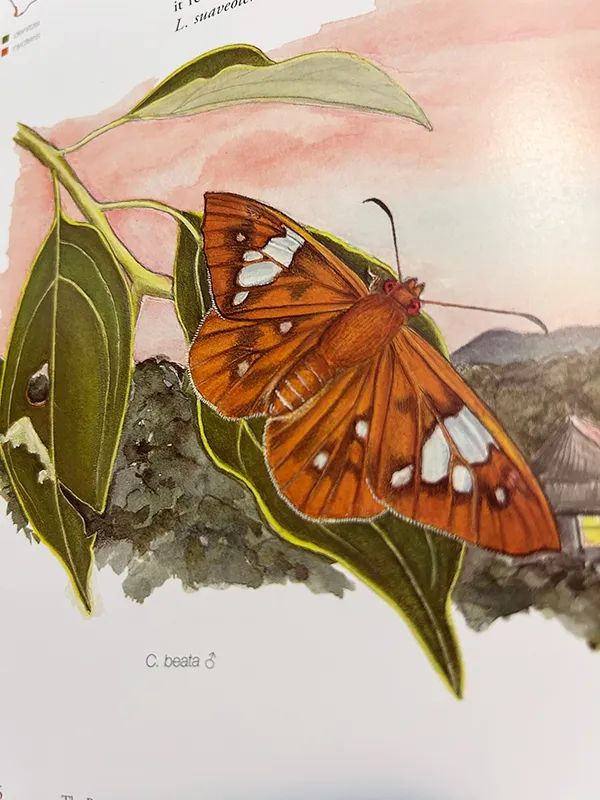
Orr and R Kitching, 2010 The Butterflies of Australia, p 66)
These butterflies fit under the family Hesperiidae (Skippers) with sub-family being Pyrginae (Flats). The Common Red Eye can be found in eastern rainforest, wetter open forest and bushy suburban gardens. Usually it is seen at dusk and it flies rapidly within a few metres (2-4 metres for perching) of the ground around dense vegetation. Daytime finds the adults resting with wings held flat under leaves in shady places. The egg is laid singly on the upper side of leaves on host plants like Cryptocarya, Litsea and Neolitsea though can also be on Annona (Custard Apple and Soursop) and Cinnamomum (Camphor Laurel).
The young larva creates a shelter by excising a piece of leaf and folding it back onto the upper surface; or two leaves together can also be shelter. The larva rests upside down in the day in the shelter and feeds at night. The pupa is suspended within the shelter and yes they do have red eyes – deep ruby red eyes in life.
Book Review
Botanic Gardens Modern Day Arks by Sara Oldfield
by Julie
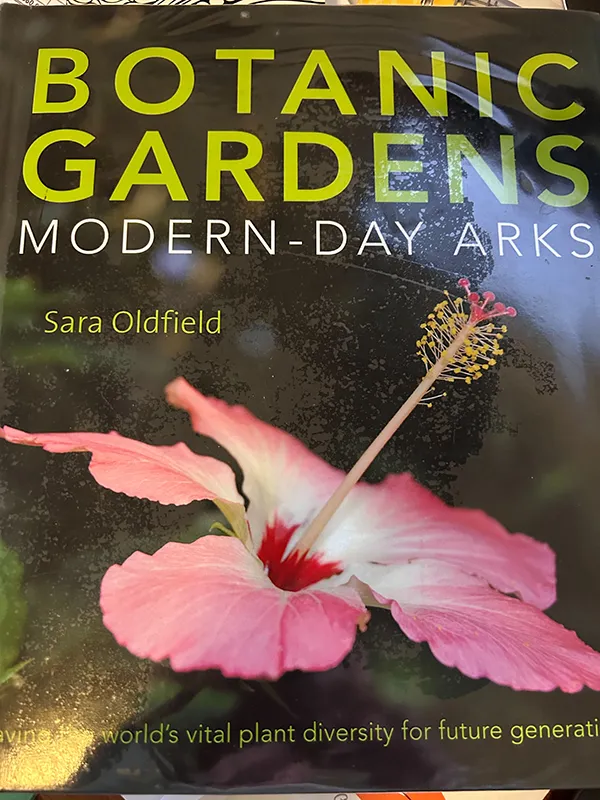
BCC Library Mt Coot-tha 580.73 OLD ; ISBN 978-1-84773-519-5
This book was published in UK in 2010 and covers 16 different Botanic Gardens around the world (including Kings Park and Botanic Gardens, W.A.). Each Garden documents their role with in situ and ex situ conservation of plant species. Plants in the wild of each country which are rare or at risk of extinction generally are propagated in the Gardens to produce seed and plants to regenerate the wild whilst taking into consideration the reasons for the limitations in the wild. Some are due to agriculture, some due to collectors, some because the plant numbers are too small to boost their own reproduction.
Royal Botanic Gardens, Kew, conservation efforts started in 1970s and they are responsible for pushing this concept with other Botanic Gardens around the world. An independent international organisation, BGCI, (Botanic Gardens Conservation International) with over 700 members in 118 countries helps to change the direction of extinction of at least one third of plants worldwide through knowledge and expertise (p24).
Special mention is made of Brooklyn Botanic Gardens, New York, where a Children’s Garden programme has been in operation since 1914. I have been there and the initial reason for this program was for nutrition for the local children. If you get a chance to go it is an area where fun, education and “natural” learning occur. (p19)
Each country has their own “target” plants or areas. In Mexico, for example, cactus like Echinocactus grusonii or golden barrel cactus is grown all around the world. However it was thought to be extinct in the wild in Mexico until another group were found 500 km away from the original site. DNA testing has been undertaken to develop a certification scheme. The cactus grown ex situ have been taken originally from the wild and are valuable as their gene pool is known. (p131)
Indonesia is one of the world’s biodiversity hotspots with 590+ species considered threatened. (p160) Rafflesia flower smells of rotting flesh and all of this species are found in Indonesian rainforests. As you know rainforests are at high risk of destruction so conservation is essential for survival of this species.
Back in Australia in Kings Park the role of built structures (some could say inappropriate to the area it is trying to conserve) like the Lotterywest Federation walkway (see p 211 for photo) to create an attraction for the public to view the Eucalyptus and surrounding vegetation. There are 246 different species of eucalyptus in the area. The root rot fungus Phytophthora cinnamomic which at that time, impacted on banksias and grevilleas mostly, is a serious threat to plant conservation in Kings Park. Ex situ planting in other Botanic Gardens has created a backup especially for Banksia brownie. (p209)
Without completely finishing reading of this book I have learnt that all Botanic Gardens have had their threats and opportunities. Some of the plant species have been saved from within the Gardens sites and local natural environments; and some at risk species have survived due to the collaboration of other Botanic Gardens cultivating species from other countries. I wish to end with a quote from Professor Stephen Blackmore, Regius Keeper, “It is imperative that people understand the fundamental role of plants in maintaining the biosphere and nowhere is better than a botanic garden to gain this understanding.” (p229) There are further resources on p232-234 including an Action at home list.
Sesame & Oregano Lavosh
Recipe by Patty
This a recipe I received from a dear friend and regularly make it
to use with a dip or even as a snack on its own.
- 1 cup plain flour
- 1/3 cup wholemeal flour
- 1 tabsp black sesame seeds
- 1 tabsp white sesame seeds
- 1 tspn dried orgeano
- 1 tspn salt
- 1/4 cup olive oil
- 1/2 cup water
Stir dry ingredients together in a bowl, add oil and water, forming
a soft, pliable dough.
Divide the dough into four and roll it out as thin as possible (ie very
thin).
Brush with oil and sprinkle with sea salt, and then cut into
strips.
Place on a lined baking tray.
Bake at 170 °C for 15-20 minutes until crisp and golden brown.
Cool on racks.
Happy Cooking. If you make them please send a photo and your address for me to come over and test them!
FBBGSA Survey
Do you want to try your luck in a draw to win two possible prizes
(see below for details)? If so give us your time to complete the
survey.
The new FBBGSA Committee is ready to move to the next stage of our mission – not quite 12 months but certainly the end of a challenging and super busy time. Now we want to review where FBBGSA is going for the next 12 months or so and members are asked to respond with your views on the following:
Now I know this takes time and some serious consideration. And a
survey by two people are not going to be representative of our
membership. So the carrot is everyone who completes the survey can add their email address to their responses and we will offer two
prizes to the lucky winners. (Pretty good odds if you ask me!) And
the prizes are: a free entry to the High Tea event in October (worth
$50) and the other prize is a free entry to the wreath making event
in November (worth $20).
Thank you to you all for your contributions and good luck with the
draw! Close off time is 30 September 2025.
Contact Us:
Website: www.fbbgsa.org.au
Email: events@fbbgsa.org.au
FBBGSA PO Box 39 Sherwood QLD 4075
ACN: 607 589 873 ABN: 20 607 589 873